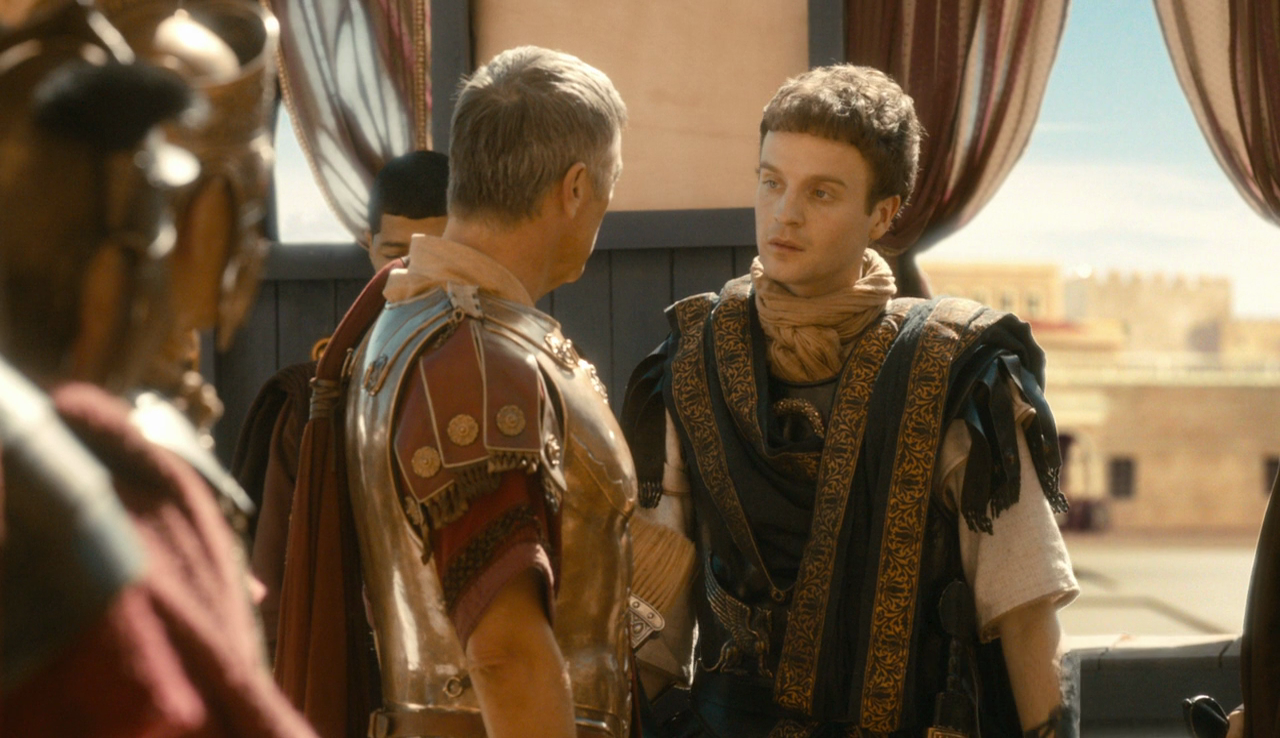
In Pilate’s Palace in Jerusalem the presence of Caligula (Andrew Gower) and his Jewish friend Agrippa (Michael Peluso) causes unrest for all members of the household, servants and masters alike. After another insult, Pilate (Vincent Regan) decides to confront Caligula about his behaviour but hesitates in the last minute to execute his plan.
Jesus’ disciples are still hiding in Jerusalem fearing for their lives, when they receive word that Philip (Joe Dixon) needs their help in Samaria. Saul Saul (Emmett J. Scanlan) is on his way to Damascus when he is faced with a life altering vision of Jesus Christ. Blinded and a changed man, he is later visited by the Christian Ananias (Nicholas Sidi), who heals and baptizes him.
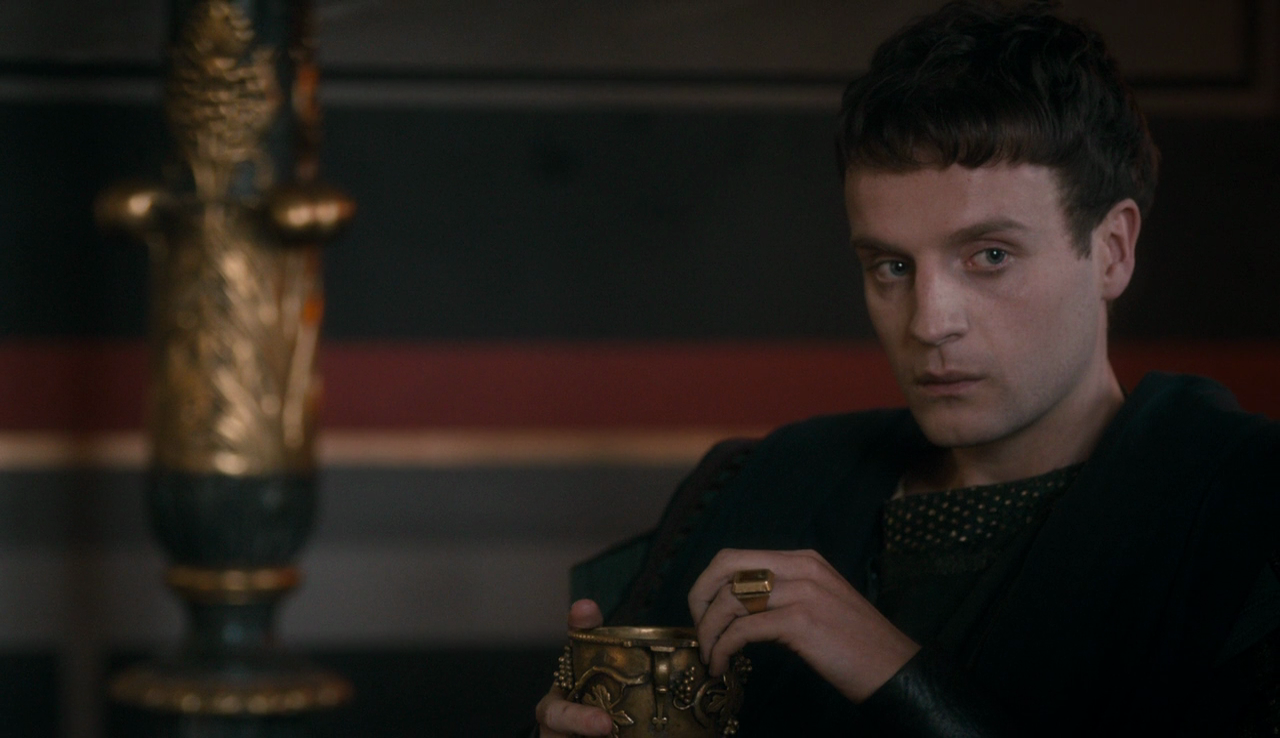
Back in the palace, Pilate and his wife Claudia (Joanne Whalley) are looking forward to their new life in Rome, which is promised to them by Emperor Tiberius (Kenneth Cranham), when news reaches them that Tiberius has passed away “peacefully in his sleep”. His successor Caligula returns to Jerusalem to demonstrate his newly gained power.
Visit our Gallery for more screencaps from this episode!
Biblical drama A.D. – The Bible Continues is a sequel to the NBC hit TV show The Bible by producers Roma Downey and Mark Burnett. It picks up immediately after the Crucifixion of Jesus Christ and shows the impact his death had on his disciples as well as the religious and political leaders of the time.
Jewish persecutor Saul (Emmett J. Scanlan) is targeting Peter (Adam Levy), a former fisherman from Bethsaida and one of the followers of the recently executed Jesus. Fearing for his life, Philip (Joe Dixon) has fled Jerusalem. After watching “Simon the Sorcerer” (Stephen Walters) perform a “miracle” in a market, he decides to show the people of Samaria the true power of God.
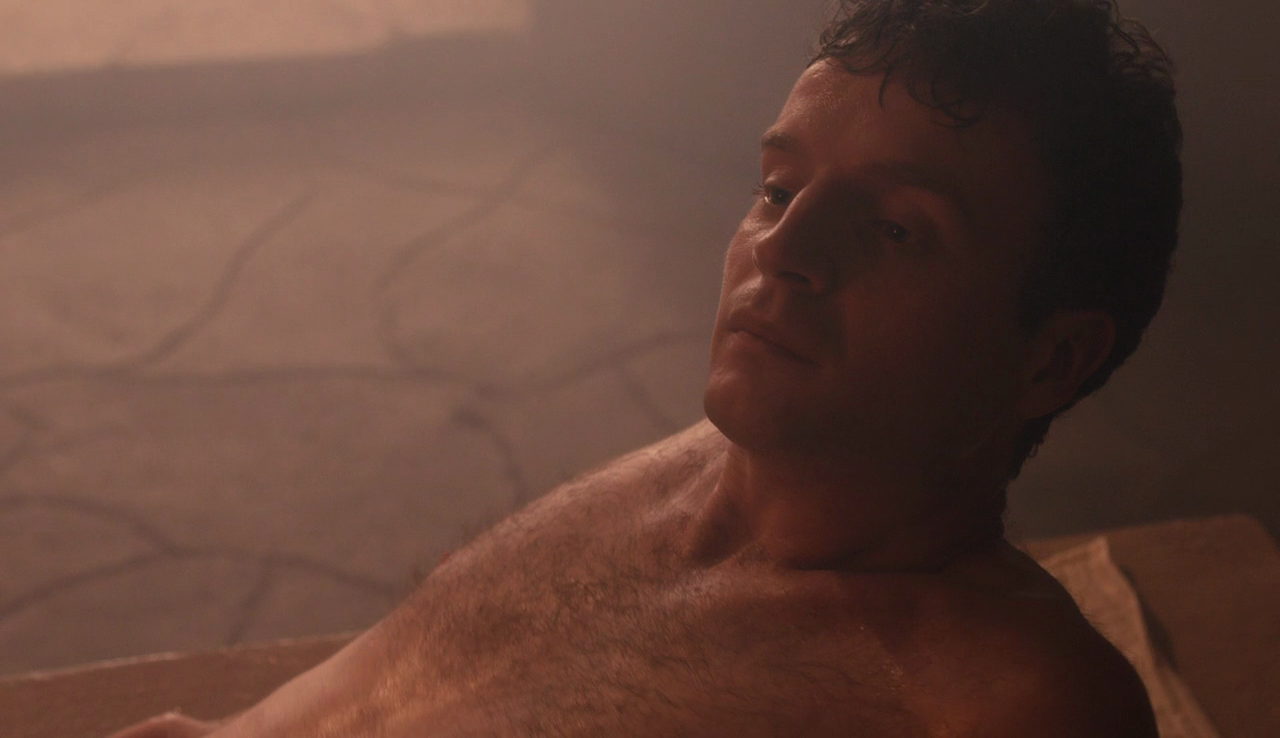
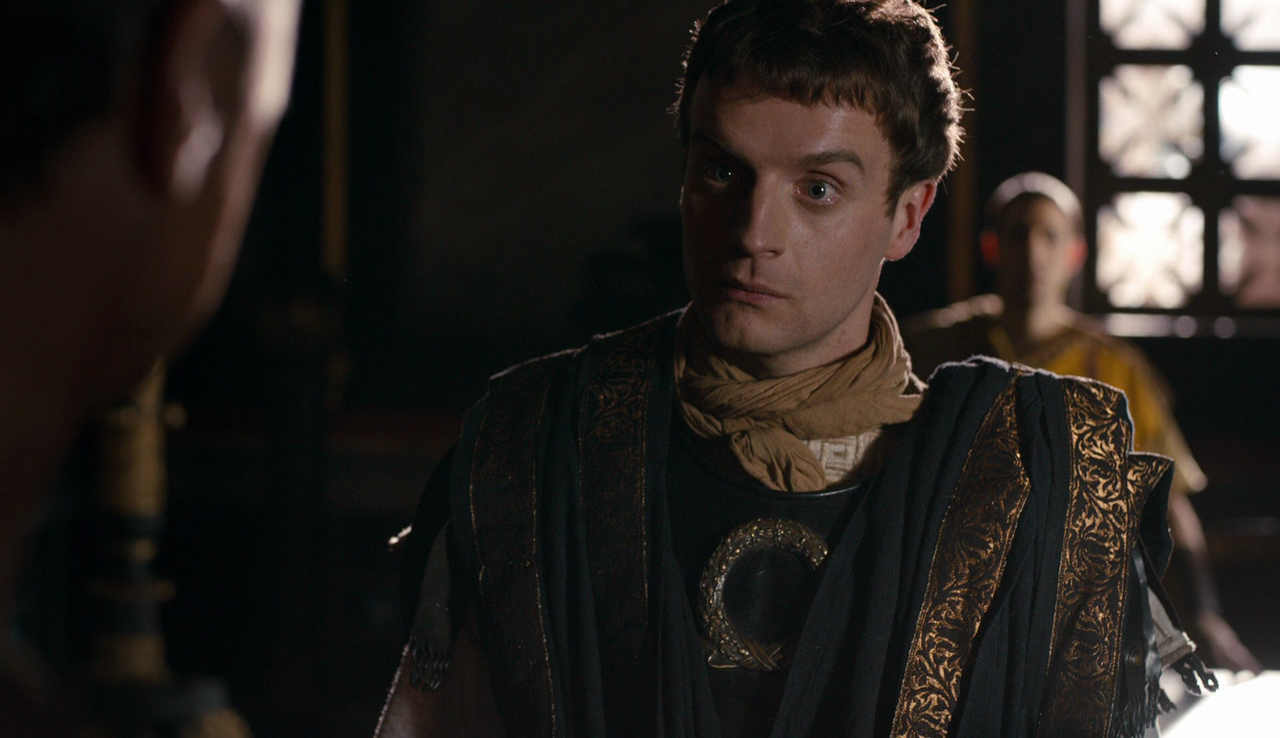
The imminent visit of Roman Emperor Tiberius (Kenneth Cranham) threatens Pilate’s (Vincent Regan) position as Governor of Jerusalem. Tiberius is accompanied by his “debauched and dangerous” nephew Caligula (Andrew Gower), who on a nightly stroll through the city reveals his quick temper and violent nature.
Visit our Gallery for more screencaps from this episode!
On Friday, 8 May 2015, Rosewater had its theatrical release in the UK, which means we’re getting a few more reviews from British TV critics.
7 May 2015: Peter Bradshaw for The Guardian
Stewart has made a very credible feature-film debut, as writer/director of this shrewd and heartfelt movie about the ordeal of Tehran-born BBC journalist Maziar Bahari, who was detained without trial, tortured and interrogated as an alleged US spy for 118 days. The case was prominently taken up on The Daily Show. Stewart has created a humane black tragicomedy […]
Explaining that “the original impetus for the film came from my own feelings of guilt and atonement over what happened to him in Iran”, Stewart offers a powerfully vindicating account of Bahari’s Kafkaesque ordeal. […] Directorially, it’s nuts-and-bolts fare, the imagined apparition of Bahari’s father (Haluk Bilginer) being one of its few stylistic flourishes. But the story is engrossing and enraging, and Stewart takes care to remind us that the real victims of oppressive regimes are those who live with them on a daily basis.
Based on Bahari’s bestselling memoir, this is a dignified and vital first film from American satirist Jon Stewart, host of Comedy Central’s The Daily Show and a vociferous campaigner for the journalist’s release. […]
For all the earnestness, however, this is not po-faced cinema. It is cinema that matters. Some of the encounters between Bahari (Gael Garcia Bernal) and his ignorant torturer, known only as Rosewater (Kim Bodnia), are deliberately comic, which allows Stewart to show us that humanity flickers within even the darkest souls. […] This remarkable film is a tribute to the bravery of foreign correspondents and a love letter to democracy.
NBC.com described Andrew Gower‘s character in their biblical drama A.D. – The Bible Continues as “debauched and dangerous” but who was the youth that ascended to become the most powerful man in the known world, the third Roman emperor, really?
Caligula was born Gaius Julius Caesar Augustus Germanicus on 31 August 12 in Antium (near Rome) as the son of popular Roman general Germanicus and his wife Agrippina, who was a granddaughter of the famous Emporer Augustus.
Caligula’s mother followed her husband on all of his campaigns which meant that Caligula grew up in military camps. His father’s soldiers even gave him his nickname “Caligula” which is a diminutive form of the Latin word “caliga”, a Roman soldier’s traditional footwear.
Caligae – the traditional footwear of a Roman soldier
When Caligula was 2 years old, Augustus died and Caligula’s great-uncle and adoptive grandfather Tiberius succeeded him. Five years later, Caligula’s father died and his mother returned to Rome with her six children where she was soon caught up in a deadly feud with the emperor which left Caligula the sole male survivor of the family and heir to his uncle’s throne.
Outwardly unfazed by the intrigues that had killed most of his family, he joined Tiberius on the island of Capri where he lived for the following six years. According to historians, Caligula was an excellent natural actor and, recognizing danger, hid all his resentment towards Tiberius.
Tiberius died on 16 March 37 aged 77 in Misenum (near Naples). There are various rumours surrounding the circumstances of death, ranging from natural causes to Caligula killing his uncle to revenge the death of his family. Caligula succeeded him as Roman emperor at the age of only 25.
At least in the first 6 months of his reign, Caligula is described as a moderate and noble emperor, who was very popular with the people, beloved and admired by everyone in “all the world, from the rising to the setting sun.” He generously granted financial bonuses to the military and organized lavish spectacles and gladiatorial games for the public.
In October 37, Caligula became seriously ill – or was poisoned. He soon recovered from his illness physically but it seems to have changed him mentally completely. He had several members of his family executed and forced the Praetorian prefect Macro to commit suicide. Caligula’s overspending had also exhausted the state’s treasury within a very short time which led him to take some desperate measures in order to find new funding.
He started a series of public and political reforms, he allowed new members into the equestrian and senatorial orders and restored the practice of democratic elections. All these reforms were eyed suspiciously by the established members of the Roman senate who feared for their wealth, influence and power, and eventually caused a break between the young Emperor and the senate.
Caligula re-established Tiberius’ “treason trials” and had several senators degraded or put to death. Resentment against him among the nobles of Rome grew and conspiracies bloomed. The situation escalated when Caligula announced that he wanted to leave Rome permanently and move to Alexandria in Egypt where he hoped to be worshipped as a god. Afraid to lose their power and influence over the Emperor, members of the senate and the Praetorian Guard led by officer Cassius Chaerea cornered Caligula on 22 January 41 and stabbed him to death parallelling the assassination of the first (Gaius) Julius Caesar, Caligula’s namesake.
All surviving contemporary sources about Caligula’s life (except one) describe him as an insane emperor who was self-absorbed, angry, killed on a whim, and indulged in too much spending and sex. He is accused of sleeping with other men’s wives and bragging about it, killing for mere amusement, deliberately wasting money, causing starvation, and wanting a statue of himself in the Temple of Jerusalem for his worship.
Once, at some games at which he was presiding, he was said to have ordered his guards to throw an entire section of the audience into the arena during the intermission to be eaten by the wild beasts because there were no prisoners to be used and he was bored.
Later historians added stories of Caligula’s insanity and accused him of incest with his three sisters and say he also prostituted them to other men and turning the palace into a brothel. He sent his troops on illogical military exercises and most famously planned to give his favourite horse Incitatus the title of a consul, the highest political rank.
All original sources, written and otherwise, about him were systematically destroyed after his death. Much of what we know today about Caligula’s reign comes from the accounts of Roman historians Suetonius and Cassius Dio, who wrote their histories on Caligula many decades after his death and mostly based on hearsay. The validity of these accounts is debatable. In Roman political culture, insanity and sexual perversity were often presented hand-in-hand with poor government.
Caligula is the prototype of the insane tyrant but does he really deserve his bad reputation? Modern historians actually see Caligula as the victim of a smear campaign. Probably not everything that was written about him can be dismissed as pure fiction but it is possible that stories about him became more and more exaggerated as centuries passed on. Some of it might be altered deliberately by members of the Senate and Roman nobility as they saw their power restricted more and more by Caligula who was only the third Roman emperor.
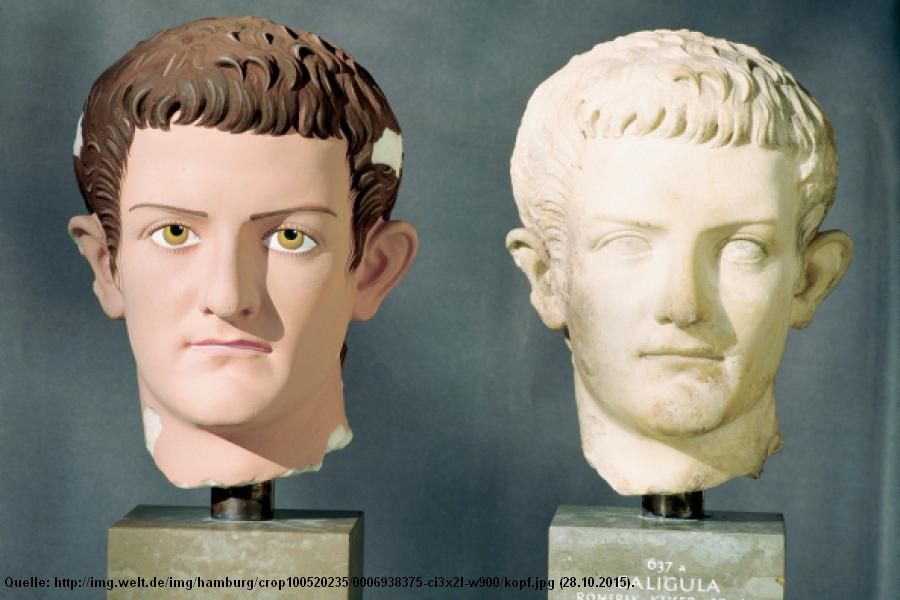
Ancient sources also report that Caligula suffered from the “falling sickness” (epilepsy) and insomnia while modern historians think he might have had hyperthyroidism or meningitis. Based on scientific reconstructions of his official painted busts, Caligula had brown hair, brown eyes, and fair skin.
Among them is Andrew Gower who will play the future Roman Emperor Caligula.
“The youth who will one day be the Emperor of Rome, Caligula is wild and sadistic with a taste for debauchery and destruction that knows no limits.“
After doing some research, we think it is safe to say that Caligula will be one h*** of a character to play! Read our findings about the “real” Caligula.
A.D. will premier on Easter Sunday, 5 April 2015 and continue weekly with 12 one hour long episodes.
We got a few more reviews of Rosewater after its theatrical release on 7 November 2014:
13 November 2014
Richard Corliss for Time Magazine
[…] Jon Stewart’s movie […] admits a saving sense of humor and proportion to the ordeals of its real-life protagonist. […]
More important, the first time adaptor-director has created a fine film with few surprises but a genuine grasp of the director’s craft. Shot in Jordan by ace indie cinematographer Bobby Bukowski (The Messenger, The Iceman), the movie has a sharp grasp of time and place […]
You may quibble with the international caste of Stewart’s casting: the Mexican García Bernal as Bahari […] That question matters less, given the strong and expertly judged performances all around — especially García Bernal’s nuanced juggling act of anger and anguish, hope and despair.
The virtue of this movie is its commitment to political ambiguity and emotional truth. […] Though not really a comedy, Rosewater is a demonstration of the creed behind The Daily Show: belief in the crucial need for impious wit against entrenched power. The freedom of the press is also the freedom to depress, and to inspire.
That the movie is as tense and chilling as it is owes much to Stewart’s keen eye for the way humor surfaces even in the dark places. […] Mexican actor Gael García Bernal plays Bahari. He’s exceptional in his scenes with the first-rate Kim Bodnia. Kudos to Stewart for making Rosewater more than an earnest plea for journalistic freedom. He makes it personal.
Among its virtues, “Rosewater,” the directorial debut of Jon Stewart, is an argument for filmmakers to start their trade after they’ve looked beyond the limits of their own horizons. […] Mr. Stewart’s interest in the material is obviously personal, but his movie transcends mere self-interest.
It also comes across as a satirist’s impassioned bid to promote global sanity. In “Rosewater,” Stewart suggests that a government that will not tolerate humor is capable of the worst tyrannies.
John Middleton (John Simm) has woken from his coma but is unable to speak. His wife Grace (Maxine Peake) is worried about what he will say and how much he might remember from the accident. Martha (Charlie Murphy) moves back in with her father Reverend Lane (Scott Handy) and is surprised to find Nurse Joy Dangerfield (Juliet Aubrey) living there.
Lady Allingham’s (Juliet Stevenson) world is falling apart: with one of her sons being gay, the other one about to be divorced, she fears she’ll never have an heir. Her daughter Caro (Emily Beecham) reminds her that she already has one: the illegitimate boy Caro had after a brief encounter with Bert Middleton’s older brother Joe (Nico Mirallegro) and who had been given up for adoption without her consent.
Bill Gibby (Derek Riddell), who is now the leader of the city council of Sheffield, is back in the village with plans for a reservoir which could supply Sheffield with clean water but would involve flooding the village. When Grace hears about the plan, she vows to stop it in a passionate speech with the other villagers, including Gilbert (Andrew Gower) and Agnes Hankin (Chloe Harris) applauding her.
Visit our Gallery for more screencaps from this episode!







 Andrew Gower Online